
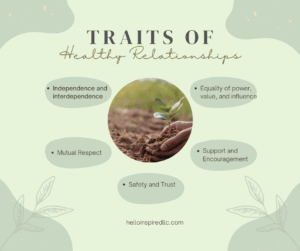
Our intimate relationships are the most impactful influence on our adult self-esteem and emotional wellbeing.
I prefer to be an encouragement and bring good news, but all too often I see people who have been lured in and captivated by someone who appeared wonderful only to find themselves confused and trapped by what I call ill-intended good behavior. This is the person we have been looking for all our lives, they are perfect for us!
Perfect is a red flag! Perfect is enticing and once convinced, it is very hard to see clearly. We feel it but can’t quite put our finger on it. People outside of the situation may see it clearly, but this is akin to watching a scary movie when the person is going into that room and we are like “Do not do it!” It is much clearer from the outside.
So, I bring the bad news, which I call informed consent. There is a softer side of narcissism that is equally, if not more dangerous to us as any other kind of abuse because it is a silent poison taking over from the insides, the undetectable carbon monoxide of relationships.
When most people think of narcissism, they picture someone loud, flashy, and attention-seeking. The salesperson! But not all narcissists fit that mold. Some are more subtle—quiet, self-pitying, or even humble on the surface. This is often called covert narcissism (sometimes “vulnerable narcissism”).
Unlike the overt narcissist, who openly demands admiration, the covert narcissist tends to operate in quieter, more hidden ways. That can make them harder to spot.
Here are some common signs:
🚩 1. Playing the Victim
They frequently position themselves as misunderstood, mistreated, or underappreciated. Even when they’ve hurt others, they may flip the script to gain sympathy.
🚩 2. Passive-Aggression
Instead of outright anger, they use subtle digs, sarcasm, backhanded compliments, or silent treatment to express resentment.
🚩 3. Envy and Resentment
They struggle to celebrate others’ successes. Instead, they downplay achievements or find ways to bring the focus back to themselves.
🚩 4. False Humility
They may act modest or self-deprecating, but it’s often a strategy to fish for reassurance, compliments, or to appear morally superior.
🚩 5. Emotional Manipulation
Covert narcissists can use guilt, shame, or obligation to control others. Phrases like, “After all I’ve done for you…” are common.
🚩 6. Hypersensitivity to Criticism
Even gentle feedback may trigger defensiveness, sulking, or withdrawal. They may accuse you of being “too harsh” or “unfair” whenever you set a boundary.
🚩 7. Withholding Love or Attention
Instead of open conflict, they may withdraw affection, go cold, or use silence to punish when things don’t go their way.
🚩 8. Quiet Superiority
They might not brag loudly, but they carry an unspoken sense of being smarter, kinder, or more sensitive than everyone else. This subtle arrogance often leaks out in judgments of others. They are often the expert of the relationship, they know best and are quite convincing.
NOTE: the above behaviors are not because they are just hurt or just mad or they have trauma; people who are just hurt or mad return to baseline and work towards mutually beneficial outcomes. What is being described here is a pattern of behavior in which the person always wins, they always benefit. At any cost. They change the narrative to fit their goal. They use good communication and relationship skills to control, manipulate, speak down to, and make others feel crazy or guilty or extra good to achieve what they want.
Protecting Yourself
- Look for patterns, not moments. Everyone has bad days, but consistent manipulation, self-victimization, or lack of accountability is a red flag.
- Set clear boundaries. Covert narcissists often push limits quietly—stand firm and repeat your boundaries as needed. They often use boundaries not as a means of self-protection and self-advocacy, but as a means to control and/or isolate another.
- Don’t get pulled into guilt. Their self-pity can be persuasive, but you are not responsible for managing their emotions.
- Seek outside perspective. Trusted friends, family, or a therapist can help you reality-check what you’re experiencing. Those in relationship with people who act this way often begin to feel increasing anxiety and depression. They begin doubting their perceptions and realities and feel like they are crazy.
A covert narcissist’s tactics can leave you questioning yourself, feeling guilty, or walking on eggshells. Remember: awareness is power. Once you see the patterns, you can take steps to protect your peace and well-being
Overt vs. Covert Narcissists
While both share the same core traits of narcissism—lack of empathy, sense of entitlement, and need for control—they express them in very different ways.
| Trait | Overt Narcissist | Covert Narcissist |
| Style | Loud, grandiose, attention-seeking | Quiet, reserved, self-pitying |
| Attention-seeking | Demands admiration openly, brags, dominates conversations | Seeks attention indirectly through guilt, victimhood, or subtle manipulation |
| Conflict | Explosive, aggressive, argumentative | Passive-aggressive, sulking, silent treatment |
| View of Self | “I’m the best, and everyone should know it.” | “I’m misunderstood, more sensitive than others, and people don’t appreciate me.” |
| Response to Criticism | Angry outbursts, blame-shifting | Withdrawal, defensiveness, playing the victim |
| Control Tactics | Intimidation, dominance, public put-downs | Guilt-tripping, gaslighting, emotional withdrawal |
| Envy | Openly jealous, competitive | Secretly resentful, downplays or undermines others’ successes |
| Charm | Flashy, bold, magnetic personality | Soft-spoken, appears humble or sensitive |
Key Takeaway
Overt narcissists are easy to spot—they’re loud about their need for power and admiration. Covert narcissists, however, can fly under the radar because they appear quiet, sensitive, or even selfless. But the underlying goal is the same: to control, to be superior, and to have their needs prioritized above others.
What to Do if You Suspect Someone Is a Covert Narcissist
Dealing with a covert narcissist can leave you second-guessing yourself and feeling drained. Protecting yourself requires both awareness and strategy.
1. Trust Your Gut
If something feels “off” despite the nice words or humble appearance, pay attention to that instinct. Covert tactics are designed to make you doubt yourself.
2. Watch Behavior, Not Words
They may talk about respect, love, or boundaries—but consistent behavior reveals the truth. If actions and words don’t match, believe the actions.
3. Set Firm Boundaries
Decide what you will and won’t tolerate, then stick to it. Expect pushback or guilt trips but hold the line. Boundaries are not negotiable.
4. Limit Emotional Engagement
Arguing, over-explaining, or trying to “fix” them usually backfires. Stay calm, brief, and firm in your responses.
5. Don’t Take the Bait
Their victimhood, guilt-tripping, or passive-aggression can pull you into defending yourself. Remember: you don’t have to prove your worth.
6. Protect Your Support System
Covert narcissists often isolate people from friends and family. Stay connected to trusted loved ones who can help reality-check your experiences.
7. Consider Professional Support
A therapist or counselor can provide tools for maintaining boundaries, processing the emotional toll, and making decisions about the relationship. Keep in mind for this and the previous suggestion that anyone who speaks against or does not support the person will become the enemy and discredited or disregarded by any means possible.
Final Thought
Covert narcissists may appear kind, sensitive, or humble—but beneath the surface lies the same drive for control and superiority as their overt counterparts. They do not play by the same rules as others and are not afraid to lie or say the wrong thing (and therefore confidently do so) because they lack the empathy or insight to care about another’s perspective or feelings, especially if it contradicts what they want or feel. Although, I’d suggest getting out of this type of relationship as this is personality and character, not a behavior issue and not likely to change. Healthy relationships are like learning to dance, each person equal in influence and importance. In this type of relationship, you are not a partner with equal value and importance, you are an instrument to meet the desires of that person. However, people often stay for many reasons so by learning the signs and protecting yourself with clear boundaries, you can keep your sense of self strong and your relationships healthy.